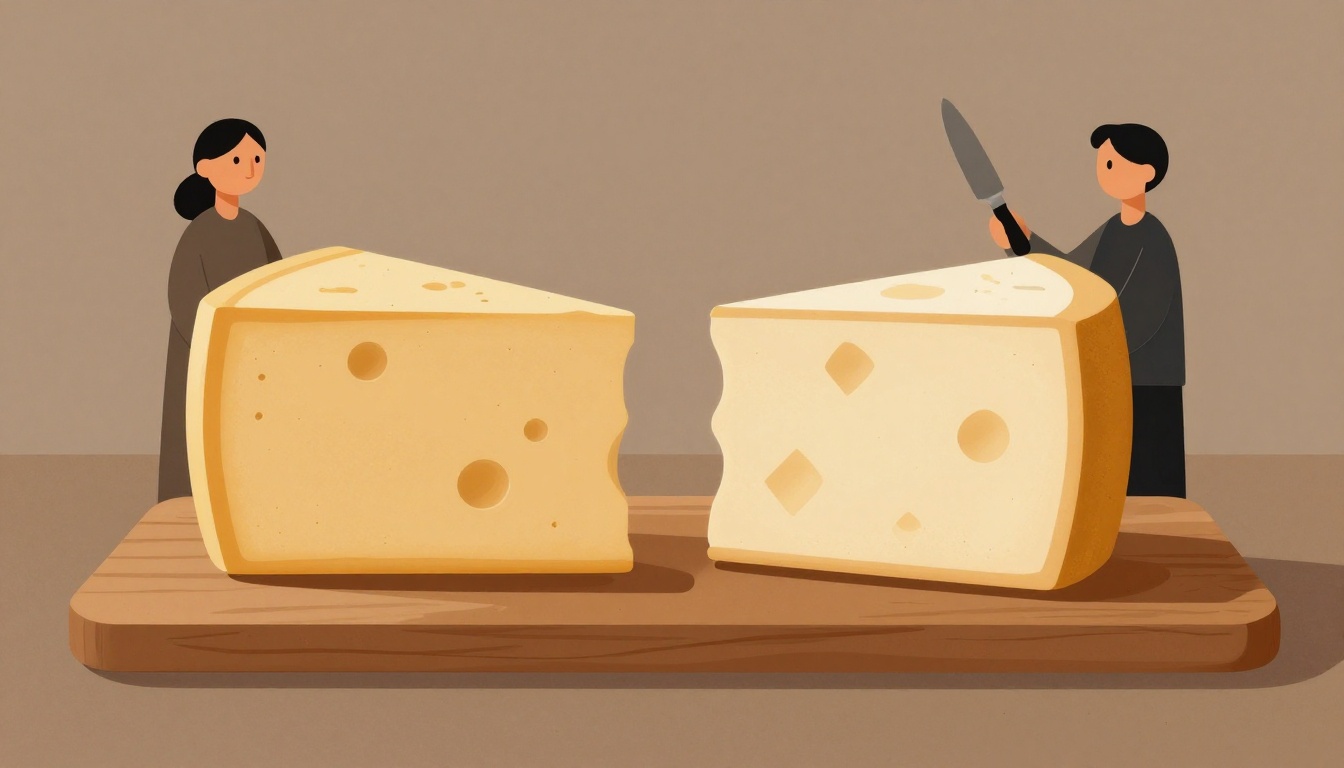
You're standing in the cheese aisle, staring at two wheels that look almost identical. One says Parmigiano Reggiano. The other says Grana Padano. Both are hard, grainy Italian cheeses. Both cost more than the stuff in the green can. So which one do you buy?
It's a common dilemma. You want authentic flavor, but you also don't want to waste money on the wrong cheese for your dish. The good news is that once you understand a few key differences, the choice becomes simple.
What is the minimum aging requirement for Grana Padano?
Select one answer.
What makes them different?
Both Parmigiano Reggiano and Grana Padano are PDO (Protected Designation of Origin) cheeses from Northern Italy. But their production rules are not the same.
Parmigiano Reggiano comes from a small area covering just five provinces: Parma, Reggio Emilia, Modena, and parts of Mantua and Bologna. The cows are fed only hay and grass — no silage. The milk must be delivered to the dairy within two hours of milking. No additives are allowed. And the cheese ages for a minimum of 12 months, with most wheels averaging 24 months source.
Grana Padano has a much larger production zone — 33 provinces across Lombardy, Veneto, Piedmont, Emilia-Romagna, and Trentino. The cows can be fed silage. The cheese can be made with lysozyme, an additive from egg whites, to control fermentation. And it ages for a minimum of just 9 months, with most wheels consumed at around 15 months source.
Taste and texture: what to expect
These differences in production lead to real differences on your plate.
Parmigiano Reggiano has a stronger, more complex flavor. It's nutty, salty, and slightly crumbly. As it ages, it develops crunchy calcium crystals that add texture. It's often called the "king of cheeses" for a reason source.
Grana Padano is milder and sweeter. It has a softer, more delicate taste and a firmer, less crumbly texture. Some describe it as butterier source.
Which one should you buy?
Here's a simple rule of thumb:
- Use Parmigiano Reggiano when you want the cheese to be a star — on a cheese board, shaved over a finished pasta dish, or in a recipe where its complex flavor will shine.
- Use Grana Padano when you need a good melting cheese for sauces, soups, or baked dishes. It also works well in recipes where you want to neutralize acidic flavors, like tomato-based sauces source.
A quick checklist for your next purchase
- Check the rind: Parmigiano Reggiano has a pin-dot pattern. Grana Padano has a dotted diamond pattern.
- Look at the age: If it's under 12 months, it's Grana Padano. If it's over, it could be either — but Parmigiano Reggiano is always at least 12 months old.
- Consider the price: Parmigiano Reggiano costs more because of stricter regulations and longer aging.
- Think about your dish: For finishing and snacking, go with Parmigiano. For cooking and melting, Grana Padano is a smart choice.
The bottom line
Both cheeses are excellent. But they're not interchangeable. Choose Parmigiano Reggiano when you want bold, complex flavor. Choose Grana Padano when you want a milder, more affordable option that still delivers authentic Italian taste.
How the Resident Expert Can Help
Maria Skidmore of Mama Maria's knows that the best Italian cooking starts with the right ingredients. Her handcrafted sauces and mixes are made with the same care and attention to detail that goes into selecting a fine Parmigiano Reggiano. Whether you're planning a family dinner or a small event, Maria can help you choose the perfect ingredients and even provide catering guidance. Visit her website to explore her award-winning product line and bring authentic Italian flavor to your table.