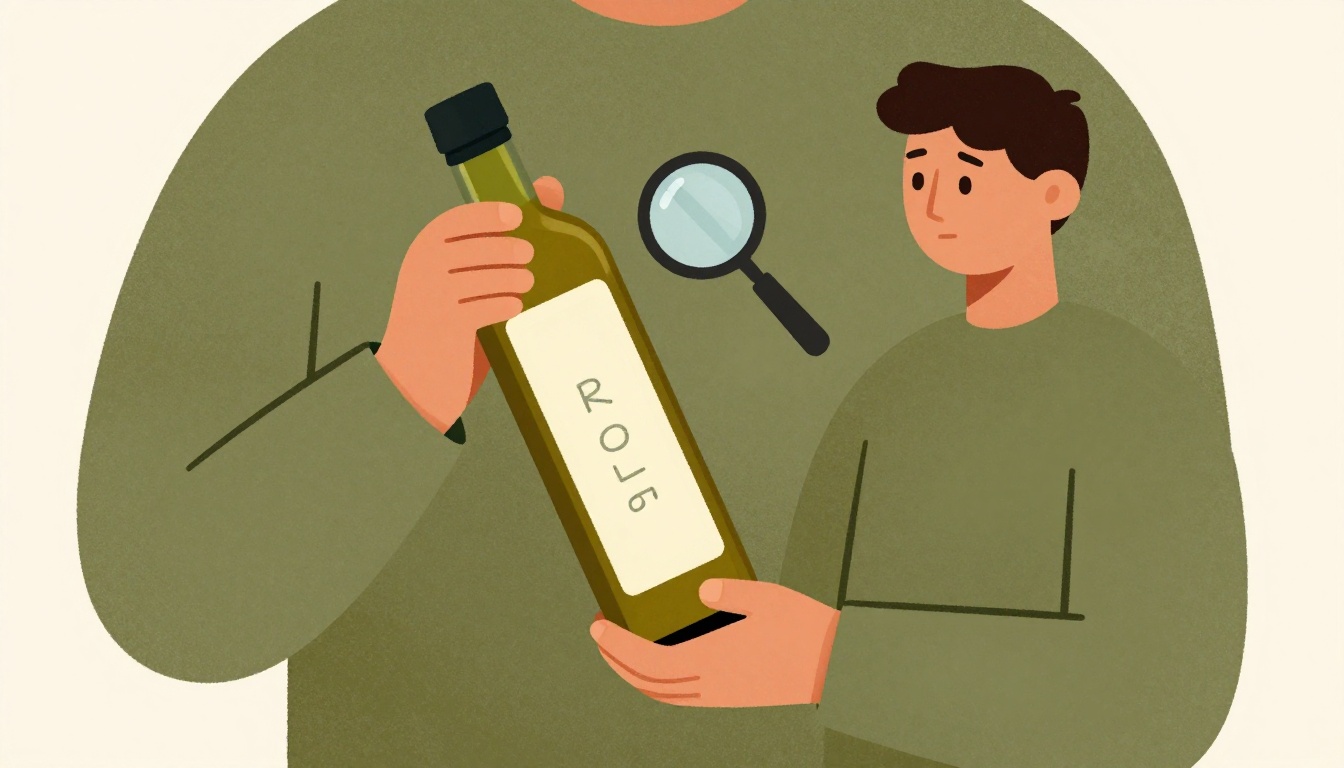
You're standing in the aisle staring at a dozen bottles of Italian olive oil. Every label screams "premium," "cold pressed," and "100% Italian." But half of them are lying — or at least stretching the truth.
The problem is that olive oil labels are designed to impress, not inform. Manufacturers know most shoppers scan the front label for 10 seconds and buy. If you want real quality, you need to flip the bottle over and read the fine print. Here's exactly what to look for.
What is the maximum free acidity allowed for extra virgin olive oil under EU law?
Select one answer.
The One Date That Actually Matters
Forget the "best by" date. That's a guess, not a guarantee. What you want is the harvest date — the month and year the olives were crushed.
Olive oil is a fresh product. From the moment it's pressed, its flavor and antioxidant compounds (polyphenols) begin to decline. A bottle from last year's harvest is already past its prime. Look for a specific month — "October 2025" — not a vague range like "2024/25." If the label only shows a crop-year range, the producer is hiding up to four months of age difference.
The rule of thumb: buy oil from the most recent harvest you can find, and use it within 18 months of that date. Fresher oil tastes brighter, feels peppery on the back of your throat, and delivers more of the health benefits you're paying for.
DOP, IGP, and What Those Seals Actually Guarantee
You've seen the little colored seals. Here's what they mean.
DOP (Denominazione di Origine Protetta) is the Italian equivalent of PDO — Protected Designation of Origin. It means every step from growing the olives to bottling the oil happened in a specific geographic region using approved methods. It's a real guarantee of origin and production standards.
IGP (Indicazione Geografica Protetta) is slightly looser. At least one stage of production — growing, processing, or preparation — must happen in the defined region. Think of it as "made in Tuscany" with paperwork.
Here's the catch: a DOP seal tells you where the oil came from, but it tells you nothing about how fresh it is. You can buy a DOP-certified bottle from three years ago that's well past its drinking window. Always check the harvest date first, then use the certification as a bonus quality signal.
Why "Product of Italy" Is a Trap
This is the most common trick on supermarket shelves. A label says "Product of Italy" in big letters on the front. You flip it over and find small print that reads: "Blend of EU and non-EU olive oils."
That means the olives were grown in Spain, Greece, Tunisia, or elsewhere — then shipped to Italy for bottling. It's legally "Product of Italy" because the final packaging happened there. But it's not Italian olive oil in any meaningful sense.
EU labeling law requires this disclosure, but it's almost always in tiny type on the back. Look for phrases like "blend of EU olive oils," "blend of non-EU olive oils," or "origin of olives: [country]." If you see a single country or region listed, you're getting a single-origin product. If you see a blend disclosure, you're getting a commodity product in a fancy bottle.
Cold Pressed, First Press, and Other Buzzwords
"Cold pressed" sounds special, but it's the baseline standard for any real extra virgin olive oil. The term means extraction happened below a controlled low temperature, which preserves flavor and nutrients. Almost every legitimate EVOO is cold pressed. When a label leads with this and nothing else, it's telling you the minimum.
"First cold pressed" is even more meaningless with modern equipment. Today's centrifugal mills make one single pass — there's no "second press" to compare it to. The phrase is technically accurate but describes standard practice, not exceptional quality.
What actually differentiates good oil? Single origin. Specific cultivar (olive variety). Harvest date. Acidity level. Those are the signals of a producer who's proud enough to put real data on the bottle.
How the Resident Expert Can Help
Maria Skidmore of Mama Maria's has spent years sourcing and cooking with quality Italian ingredients. She knows that great olive oil — like great sauce — starts with honest sourcing and respect for tradition. When you shop from a small artisan producer who puts their name on every bottle, you skip the marketing noise and get straight to what matters: fresh, authentic flavor. Whether you're stocking your pantry or planning a special meal, Maria's handcrafted approach means every ingredient has been chosen with the same care you'd use in your own kitchen.