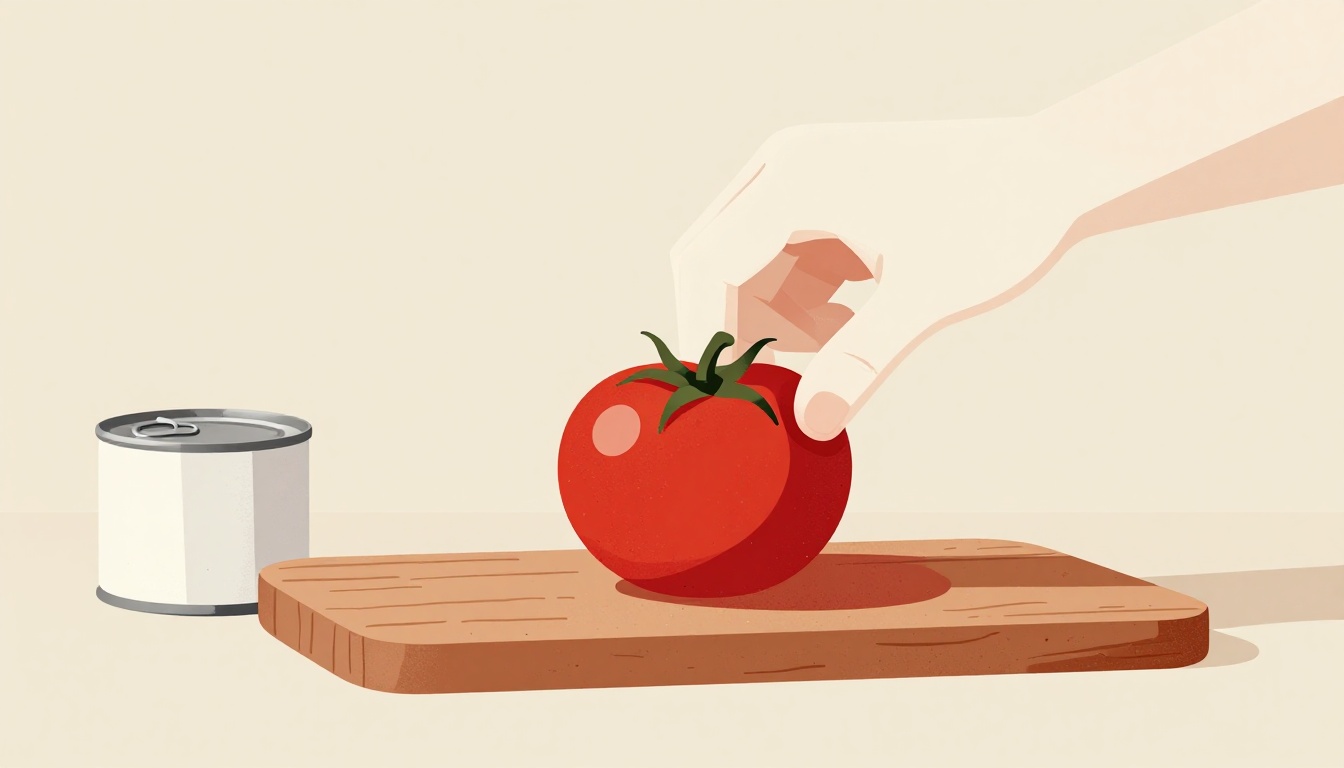
You're standing in the canned tomato aisle, staring at rows of whole, diced, crushed, and pureed options. Which one actually makes the best Italian sauce?
The wrong choice leads to watery, acidic, or overly chunky sauces. The right one gives you a silky, rich base that tastes like it simmered all day.
Here's the short answer: reach for whole peeled tomatoes, preferably San Marzano, packed in their own juice. They break down beautifully and let you control the final texture.
What is the key indicator that a can of San Marzano tomatoes is authentic?
Select one answer.
Why whole peeled tomatoes win for sauces
Whole peeled tomatoes are the most versatile canned tomato product. You can crush them by hand, dice them, or puree them depending on the dish. According to America's Test Kitchen, whole tomatoes canned without calcium chloride break down into a "rich, silky, substantial tomato sauce with excellent, deep tomato flavor." America's Test Kitchen
Diced tomatoes, by contrast, often contain calcium chloride to keep their shape. That's great for salsas and chili, but not for a long-simmered sauce where you want the tomatoes to melt.
Crushed tomatoes sit in the middle. They're convenient, but you lose control over the final consistency. Whole tomatoes give you that control.
San Marzano: worth the hype?
San Marzano tomatoes are a specific plum tomato variety grown in the Agro Sarnese Nocerino region of Campania, Italy. They have a balanced ratio of flesh to seeds and lower acidity than standard Roma tomatoes.
Look for the D.O.P. (Protected Designation of Origin) seal on the label. That guarantees the tomatoes were grown and processed in that region. Without it, the label "San Marzano" may not be authentic. Delish
Imported San Marzano tomatoes are softer and break down more easily than domestic whole tomatoes, which often contain calcium chloride. For cooked sauces, the imported varieties are generally preferred.
What to look for on the label
Check these three things before you buy:
- Ingredients: Tomatoes, tomato juice or puree, and salt. That's it. Avoid cans with added herbs, citric acid, or calcium chloride if you want the best texture.
- Packing liquid: Tomatoes packed in juice or puree have more flavor than those packed in water.
- Sodium level: Moderate sodium is fine. You can always adjust salt later.
Quick reference: which type for which dish
| Canned Type | Best Use | Why |
|---|---|---|
| Whole peeled | Marinara, Sunday gravy, Bolognese | Breaks down easily, controllable texture |
| Crushed | Quick weeknight sauces | Convenient, but less control |
| Diced | Salsas, chili, stews | Holds shape, not ideal for smooth sauces |
| Tomato puree | Smooth sauces, soups | Uniform consistency, no chunks |
| Tomato paste | Concentrating flavor | Adds depth, not a base |
A simple test for quality
Open a can and look at the tomatoes. They should be deep red, not orange or pale. Smell them — they should smell sweet and tomatoey, not metallic or overly acidic.
Taste one plain. Good canned tomatoes have a balanced sweetness and acidity. If they taste harsh or sour, they'll need longer cooking or a pinch of sugar to balance.
How the Resident Expert Can Help
Maria Skidmore of Mama Maria's has spent years perfecting her red sauce recipe using hand-selected ingredients. Her 2024 award-winning sauce proves that starting with the right canned tomatoes makes all the difference. Whether you need a jar of her handcrafted sauce or advice on building your own from scratch, Maria brings real kitchen experience to every batch.
Quiz: Test your knowledge
What is the key indicator that a can of San Marzano tomatoes is authentic?