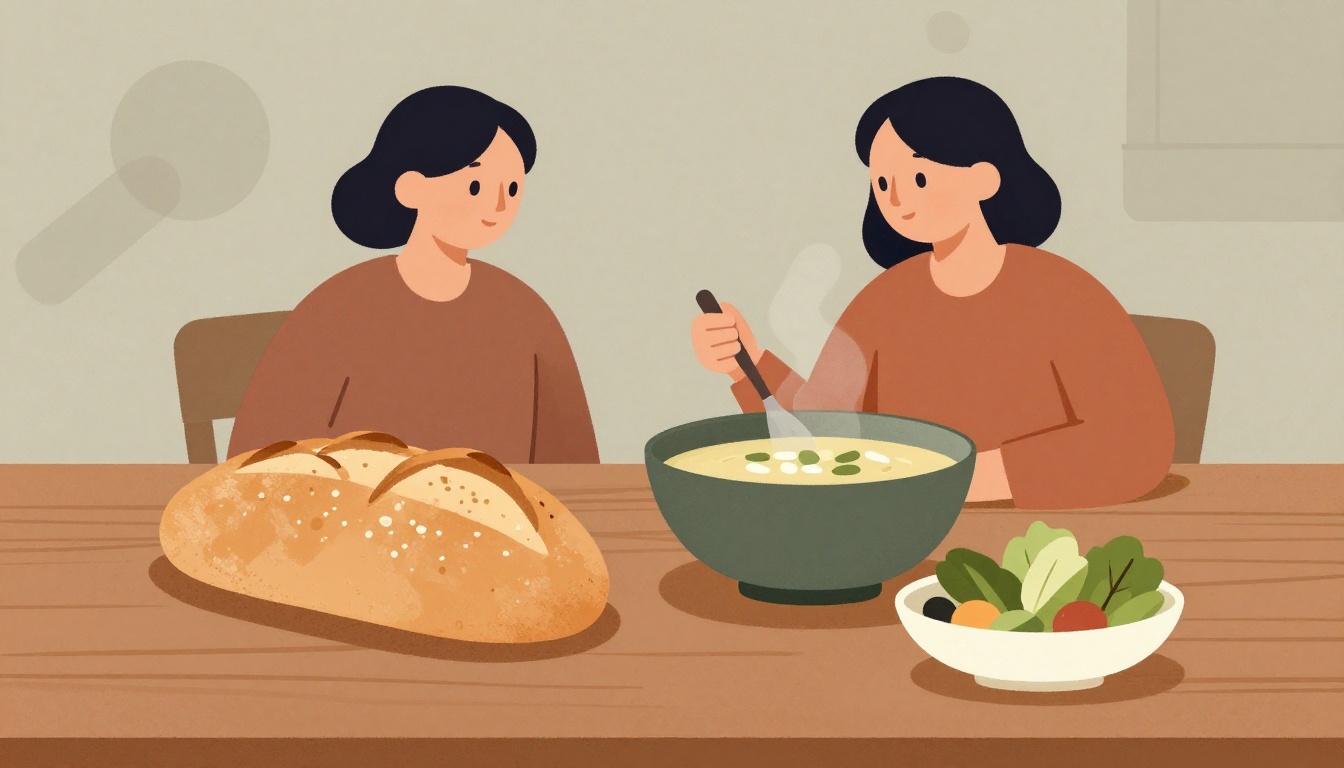
You’ve made a pot of minestrone or a bowl of panzanella, but the bread you grab can make or break the meal. Italian breads vary widely in texture, crust, and absorbency, and choosing the wrong one can leave you with a soggy mess or a bland bite. This guide explains how to match Italian breads to soups and salads, so every meal feels intentional and delicious.
Which bread is best for a hearty minestrone soup?
Select one answer.
The role of bread in Italian meals
In Italian cooking, bread is not just a side—it’s an essential element that soaks up broth, adds texture, and balances flavors. A dense, chewy loaf can stand up to hearty soups, while a lighter, airy bread works better with creamy blends. For salads like panzanella, the bread is the star, absorbing dressing and tomato juices without turning mushy.
Pairing bread with soups: the key rules
Hearty soups need rustic loaves. Soups like minestrone or lentil are thick and substantial, so they pair best with a dense, chewy bread such as pane Toscano or pane Cafone. These loaves hold their structure when dipped, providing a satisfying contrast to the soup’s richness. A bread bowl is also a functional choice for thick minestrone, as the crusty exterior holds up well and the soft interior soaks up the broth.
Creamy soups pair with lighter, flavorful breads. For puréed soups like butternut squash or carrot, a buttery focaccia adds depth and a hint of richness. Focaccia’s open, airy crumb and crispy crust allow it to absorb soup without falling apart, and its olive oil and herbs bring a welcome hit of salt and flavor. Try a brown butter and sage focaccia with sweeter veggie soups, or a red pepper and garlic version for more punch.
Classic combos to try:
- Italian white bean and sausage soup with rosemary and olive focaccia
- French onion soup with a crusty French or Italian loaf
- Creamy tomato soup with a mild sourdough boule
- Ribollita, the Tuscan bread soup, where bread is stirred in and absorbs the broth
Matching bread to salads: the panzanella principle
Panzanella, the classic Tuscan bread salad, is the ultimate test of bread selection. Traditionally made with stale bread, tomatoes, onions, and olive oil, it relies on the bread to soak up the dressing and tomato juices without disintegrating. The best choices are rustic, crusty loaves like ciabatta or pane Toscano, which have a firm structure that holds up well. Avoid sandwich bread—it turns mushy.
For a modern twist, toast the bread cubes first. This adds crunch and helps them soften gradually in the dressing, rather than becoming soggy immediately. Let the salad sit for about 30 minutes before serving so the flavors meld, but don’t leave it too long—panzanella is best within two hours of assembly.
Practical checklist for perfect pairings
- For minestrone or lentil soup: choose a dense, chewy loaf like pane Toscano or a bread bowl.
- For creamy vegetable soups: opt for focaccia, especially with herbs or olive oil.
- For broth-based soups: pick a crusty bread with an open crumb, like ciabatta, to soak up the liquid.
- For panzanella: use day-old ciabatta or pane Toscano, toasted for best results.
- Avoid soft sandwich bread in any soup or salad—it will fall apart.
How the Featured Expert Can Help
Mama Maria’s, a local catering and delivery shop, offers handcrafted Italian mixes and sauces that can elevate your soup and salad meals. Owner Maria Skidmore has earned a 2024 award for her red sauce, and her products like meatball mix and pasta sauce are made with family recipes. Visit Mama Maria’s to explore their small-batch offerings and get inspired for your next Italian meal.
Quiz: Test your pairing knowledge
Which bread is best for a hearty minestrone soup?
- A dense, chewy loaf like pane Toscano
- A soft sandwich bread
- A light, airy baguette
Correct answer: A dense, chewy loaf like pane Toscano