
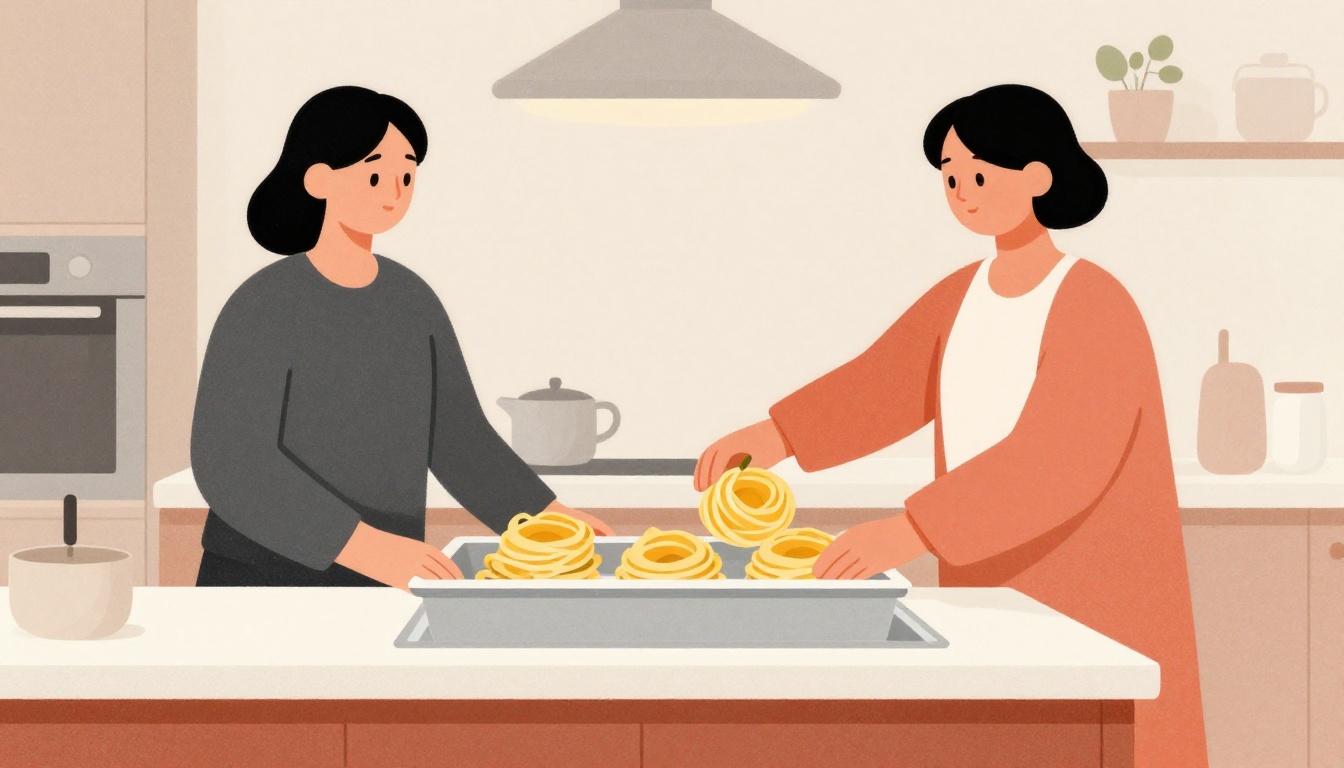
Fresh pasta is a joy to make but a pain to store. Left in the fridge, it lasts about a day before it turns sticky or sour. Freezing solves that—if you do it right. The wrong method gives you clumped noodles, freezer burn, and a mushy, mealy bite. The right method takes 20 minutes of hands-off time and keeps your pasta tasting freshly rolled for months.
According to the research, how long can properly frozen fresh pasta be stored?
Select one answer.
Why texture fails in the freezer
Fresh pasta is high in moisture. When that water freezes slowly, it forms large ice crystals that rupture the gluten structure. The result: pasta that cooks up soft and pasty instead of tender and springy. Two other culprits are air exposure (freezer burn) and thawing before cooking (sogginess).
Step-by-step: freeze fresh pasta properly
-
Flour lightly, then dry briefly. After cutting, dust the strands or shapes with a little flour so they don't stick. Too much flour dulls the taste. For long pasta, shape into nests and let them dry for about 30 minutes at room temperature. For short shapes, spread them on a sheet pan. Saputo's guide recommends this short dry to prevent clumping.
-
Flash-freeze on a tray. Lay the pasta in a single layer on a parchment-lined baking sheet. Put the tray in the freezer for about an hour, until the pieces are hard. This keeps individual strands or shapes separate. Buona Pasta Club uses this exact method.
-
Package airtight. Once frozen, transfer the pasta to a freezer bag or vacuum-sealed bag. Press out as much air as possible. Restaurateur Anthony Scotto Jr. told The Takeout that a vacuum sealer is ideal: "The less air, the better," he said, though you should avoid crushing the noodles. Label with the date.
-
Freeze for up to 8 months. Properly stored, fresh pasta keeps about eight months, according to Scotto. For best quality, aim to eat it within two to four months.
How to cook frozen fresh pasta
Do not thaw it. Thawing makes the pasta soggy and prone to sticking. Instead, drop it straight from the freezer into a large pot of heavily salted, gently boiling water. Stir immediately for the first 30 seconds to keep pieces from sticking to the bottom. King Arthur Baking advises cooking from frozen and adding about one minute to the usual cook time. Unstuffed pasta typically takes 2–4 minutes; filled pasta like ravioli takes 3–5 minutes, until it floats. Reserve a cup of pasta water before draining—it helps the sauce cling.
Quick reference checklist
- Dust cut pasta lightly with flour.
- Dry long pasta in nests for 30 minutes.
- Flash-freeze in a single layer for 1 hour.
- Transfer to airtight bags; remove air.
- Label with date; use within 2–4 months for best quality.
- Cook from frozen in salted boiling water; stir at once.
- Reserve pasta water; toss with sauce immediately.
Common mistakes to avoid
- Skipping the flash-freeze. Tossing soft pasta straight into a bag guarantees a solid block.
- Thawing before cooking. This is the fastest way to get mushy pasta.
- Over-drying. You want the surface dry, not brittle. A half hour is enough.
- Using a loose bag. Air is the enemy. Squeeze it out or vacuum-seal.
How the Featured Expert Can Help
If you'd rather skip the rolling and freezing, Mama Maria's offers handcrafted Italian mixes and sauces online. Owner Maria Skidmore's small-batch red sauce earned a 2024 award. Visit mamamariaswv.com to see the product line and catering options.
Quiz: Test your freezing know-how
Think you've got the method down? Answer this one question to check.