
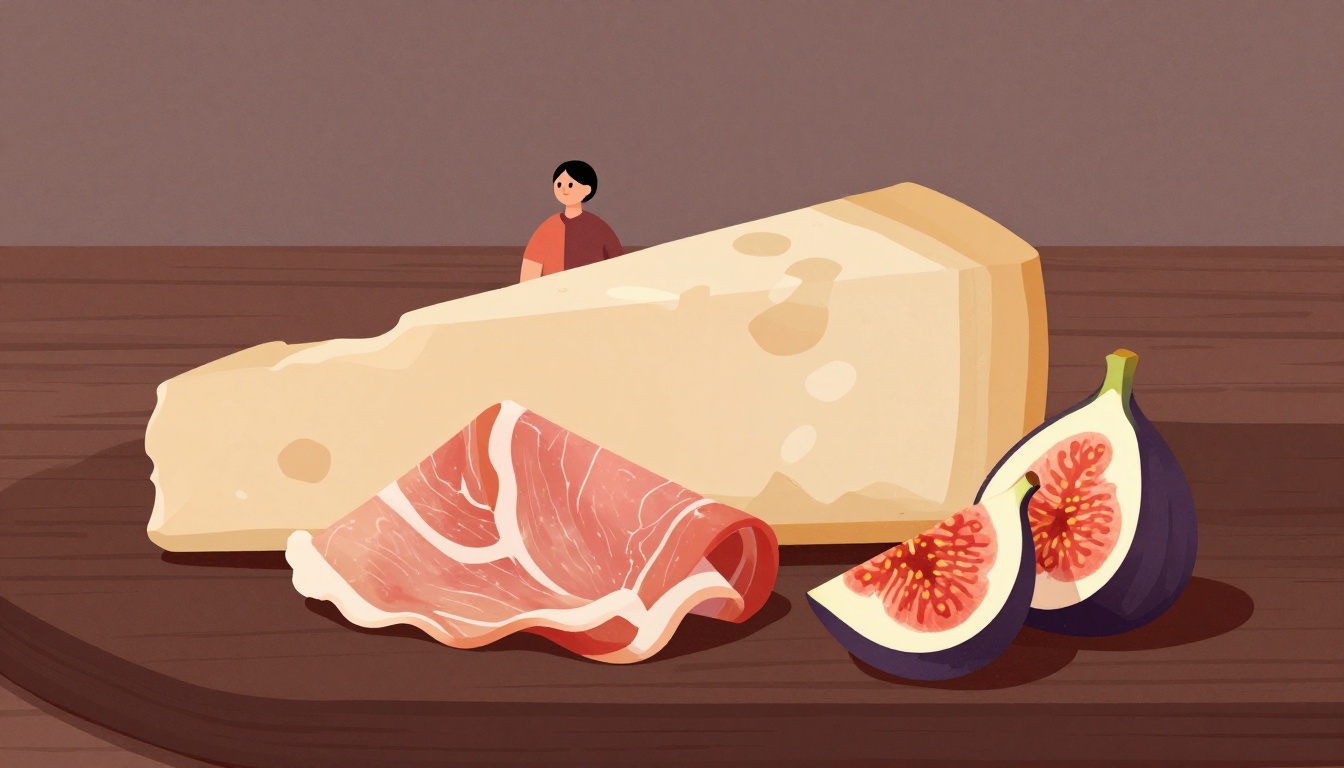
You’re standing in the aisle staring at a dozen packages labeled “prosciutto.” Some say Parma, others San Daniele. One is $8, another $18. Which one belongs on your charcuterie board?
It’s a real problem. The wrong choice can leave you with meat that’s too salty, too tough, or just bland. But get it right, and prosciutto becomes the star of your board — silky, salty-sweet, and unforgettable.
Here’s how to choose the perfect prosciutto every time.
How long does Prosciutto di Parma typically age at minimum?
Select one answer.
Understand the two main categories
All prosciutto starts as a pig’s hind leg. But the process splits into two paths: crudo and cotto.
Prosciutto crudo is raw, salt-cured, and air-dried. It’s what most people picture — thin, rosy slices with a delicate, salty-sweet flavor. This is the choice for charcuterie boards.
Prosciutto cotto is cooked ham. It’s pink, moist, and milder. Great for sandwiches, but not the classic board experience.
Stick with crudo for your board.
Know the PDO varieties
Protected Designation of Origin (PDO) means the ham is made in a specific region using traditional methods. These are your best bets for quality and flavor.
- Prosciutto di Parma: The most famous. Sweet, nutty, and buttery. Aged at least 12 months. Pairs perfectly with Parmigiano-Reggiano and melon.
- Prosciutto di San Daniele: Darker color, sweeter taste, softer texture. Aged 13–14 months. Try it with fresh figs or a drizzle of balsamic.
- Prosciutto Toscano: More seasoned, with a darker, firmer texture. Often includes spices like pepper and garlic. Pairs well with aged pecorino.
- Prosciutto di Carpegna: Leaner, with a delicate, slightly sweet flavor. Good for lighter boards with fresh cheeses.
Each PDO ham uses only pork and sea salt — nothing else. That purity is what makes them special.
Check the aging
Aging time directly affects flavor and texture. Most prosciutto crudo ages between 14 and 36 months. Longer aging means more concentrated flavor and a firmer, more crystalline texture.
- 14–18 months: Soft, mild, and tender. Great for beginners.
- 20–24 months: More intense, with a deeper savory note. Ideal for pairing with bold cheeses.
- 30+ months: Rich, complex, almost crumbly. A splurge for special boards.
How to pair prosciutto on your board
Prosciutto is versatile. Here are three foolproof pairings:
- Prosciutto + Parmigiano-Reggiano: The classic. The saltiness of the ham and the nutty crystals of the cheese are a perfect match.
- Prosciutto + fresh figs or melon: The sweetness of the fruit balances the salt. Wrap slices around wedges for easy bites.
- Prosciutto + aged balsamic: A drizzle of thick, syrupy balsamic adds acidity and depth.
Avoid pairing delicate prosciutto with overly pungent cheeses like blue cheese — they’ll overpower it.
A quick checklist for buying
- Look for PDO labels (Parma, San Daniele, Toscano, Carpegna).
- Check the aging time on the package.
- Choose slices that are evenly marbled with fat — that’s flavor.
- Avoid packages with excessive liquid or torn slices.
- Buy from a reputable source that slices fresh when possible.
How to serve it
Take prosciutto out of the fridge 15–20 minutes before serving. Room temperature brings out the flavor and softens the fat.
Arrange slices loosely — don’t press them flat. Let them breathe. Guests should be able to pick up a slice easily.
Quiz: Test your prosciutto knowledge
Before you head to the store, check your understanding.
Question: How long does Prosciutto di Parma typically age at minimum?
- 6 months
- 12 months
- 24 months
How the Resident Expert Can Help
Still unsure which prosciutto to pick? Maria Skidmore at Mama Maria’s has spent years handcrafting Italian specialties and can guide you to the perfect ingredients for your board. Whether you need a recommendation for a specific PDO ham or want to pair it with a handcrafted sauce, her expertise is just a click away.