What is the actual difference between sweet and hot Italian sausage?
Select one answer.
Start with the label, not the brand
Most shoppers freeze at the meat case because the labels look interchangeable. They aren't. "Sweet" and "hot" describe the same sausage with and without crushed red chili, and sweet is not sweetened — it just means mild (Crowd Cow). Once you know that, the decision gets much simpler.
Italian sausage is fresh pork seasoned with fennel — that's the defining flavor, not the garlic or the paprika. Take the fennel out and you have generic pork sausage. Leave it in and the sauce tastes Italian. So the first thing to check on any package is whether fennel seed or anise appears in the ingredient list.
Sweet vs. hot vs. mild: what actually changes
- Sweet is the baseline Italian sausage. It's seasoned with fennel, black pepper, garlic, paprika, and sweet basil, giving a subtle, aromatic flavor (Logan's).
- Mild is essentially the same idea. In most recipes you can swap sweet for mild and vice versa without any problem (Greatist).
- Hot adds spicy red pepper — cayenne or red pepper flakes — to the same base. That's the only real difference (Greatist).
If a recipe calls for hot and you only have sweet, add crushed red pepper from your spice rack. If it calls for sweet and you only have hot, use less and taste as you go.
Match the sausage to the sauce you're building
Think about the sauce first, then pick the sausage.
- Slow-simmered tomato gravy or ragù: sweet or mild. The fennel and basil come through over a long cook, and the sauce stays balanced for a crowd.
- Creamy tomato sauce: hot works well. Spicy Italian sausage, tomatoes, garlic, cream, parmesan, and fresh basil is a proven combination (Salt & Lavender).
- Broccoli rabe or bitter greens: hot. Spicy Italian sausage pairs with pleasantly bitter broccoli rabe in a rich tomato sauce served with al dente orecchiette (DeLallo).
- Feeding a mixed table: buy both and let guests choose, or cook sweet and set out crushed red pepper on the side.
A buying checklist for the meat case
- Read the ingredient list. Fennel seed or anise should be there. If it isn't, it's not really Italian sausage.
- Decide heat level by dish, not habit. Sweet for long-simmered sauces, hot for creamy or bitter-green pairings.
- Check the format. Loose ground sausage crumbles easily into sauce; links hold shape and can be sliced or browned whole first.
- Look at the fat. Sausage is raw and needs to reach 160°F, so plan to cook it through before it goes into sauce (Crowd Cow).
- Buy fresh, use soon. Fresh sausage is perishable. Freeze what you won't cook within a few days.
How to cook it into the sauce
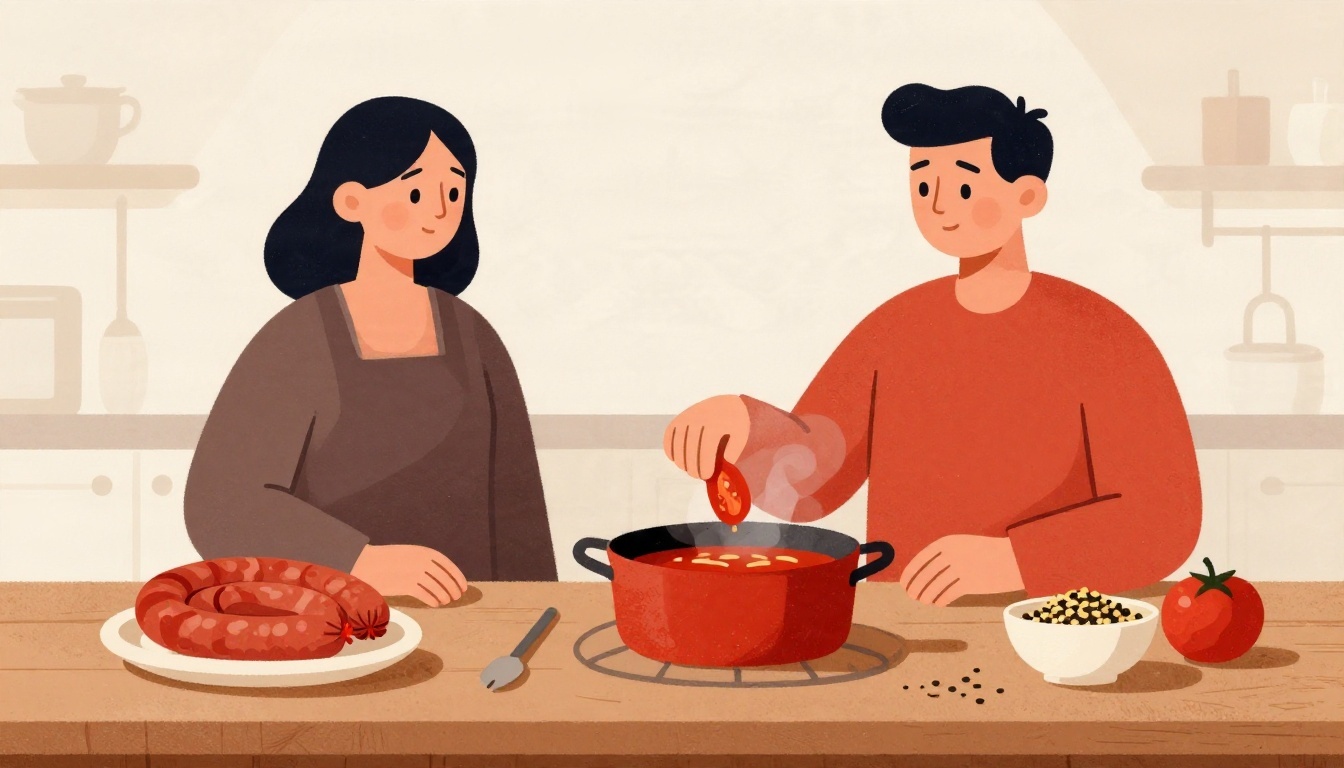
Brown the sausage first in a little olive oil, breaking it up or leaving links whole. Once it's cooked through, drain excess fat if needed, then build the sauce in the same pan so the browned bits stay in the dish. Add garlic, then tomatoes or cream, and simmer until the sauce thickens. Finish with parmesan and fresh basil right before serving.
If you're using links, brown them whole for color, then slice and return them to the sauce so the pieces stay juicy. If you're using loose sausage, crumble it finely so it distributes evenly through the pasta.
Storage and make-ahead notes
Cooked sausage sauce keeps in the refrigerator for a few days and freezes well. Cool it fully before freezing, and reheat gently so the sausage doesn't toughen. Raw sausage should be kept cold until you're ready to cook it, and any sausage that has reached 160°F is safe to eat.
Quick quiz
Test what you just learned before your next grocery run.
How the Featured Expert Can Help
Mama Maria's is a local catering and delivery shop that sells handcrafted Italian mixes and sauces online. Owner Maria Skidmore offers a small line of products, including meatball mix and pasta sauce, and earned a 2024 award for its red sauce. If you want a sauce that's already built to pair with sausage, you can order directly from Mama Maria's.