
Which olive does Olives101 recommend as the buttery green anchor of an antipasto platter?
Select one answer.
Start with contrast, not a single favorite
The most common mistake on an antipasto board is buying one big jar of one olive. Even a great olive, served alone, flattens the plate. Antipasto works on contrast: something mild and buttery, something briny and sharp, something dark and intense.
A reliable approach is to pick three olives that differ in color, texture, and salt level. Olives101's antipasto guide recommends a buttery green Castelvetrano, a meaty purple-black Kalamata, and a wrinkled oil-cured black olive for depth, with a herby marinated green as an optional fourth. That gives you a green, a purple-black, and a matte black — three distinct pools of color and three different bites.
Know the main Italian table olives
Italy grows more than 500 olive varieties, though most go to oil rather than the table, according to Giadzy's guide to Italian olives. The ones you are most likely to see on a platter:
- Castelvetrano — bright grass-green, round, buttery and mild with a faint sweetness. The easiest entry point for olive skeptics.
- Cerignola — from Puglia; very large, pale green, mild and crisp with a meaty bite. Usually sold whole.
- Gaeta — purple-brown, soft, mellow with a faint bitterness. Good with bresaola and marinated artichokes.
- Taggiasca — small, from Liguria, often sold pitted or packed in oil.
- Oil-cured black — wrinkled and matte, intense, savory, slightly bitter. Best in small amounts with aged cheese and bread.
One caution on names: a variety name is a style, not a passport. Kalamata is a Greek variety and a protected name, but "Kalamata-style" olives are grown well beyond Greece, and Cerignola-style olives appear outside Puglia too. If origin matters to you, read the back label rather than the front.
Read the cure before you buy
Olives cannot be eaten straight from the tree; they must be cured to remove bitterness. The cure shapes both flavor and texture, and it is the detail most shoppers skip.
- Brine-cured olives tend to be sweeter and plumper.
- Salt-packed olives lose moisture, giving a softer texture and more intense flavor.
- Oil-packed olives are typically salt-cured first, then rinsed and jarred in olive oil.
- Air-dried olives come out very wrinkled, dense, and intense.
If you prefer a milder olive, lean brined. If you want depth and punch, look for salt-cured or oil-cured. Giadzy explains these curing methods in more detail.
Match each olive to what sits beside it
Olives earn their place when they pair deliberately with the rest of the board:
- Castelvetrano with fresh mozzarella and prosciutto
- Kalamata with feta, salami, and roasted peppers
- Cerignola with provolone and mortadella
- Oil-cured black with hard aged cheese and crusty bread
- Gaeta with bresaola and marinated artichokes
If you are short on time, a simple mix of green and black olives tossed with extra virgin olive oil, garlic, rosemary, and lemon peel works well as a marinated option.
A practical buying checklist
- Count your varieties. Three is enough for a small board; add a fourth only if the platter is large. More than four and each one gets lost.
- Check the cure. Brined, salt-packed, or oil-packed — decide which texture you want before you commit.
- Read the back label for origin. Front-label variety names describe style; the back tells you where the olives grew.
- Buy pitted only when you need it. Many whole olives keep better texture and are usually sold stone-in.
- Taste before you commit to a large jar if the shop allows it.
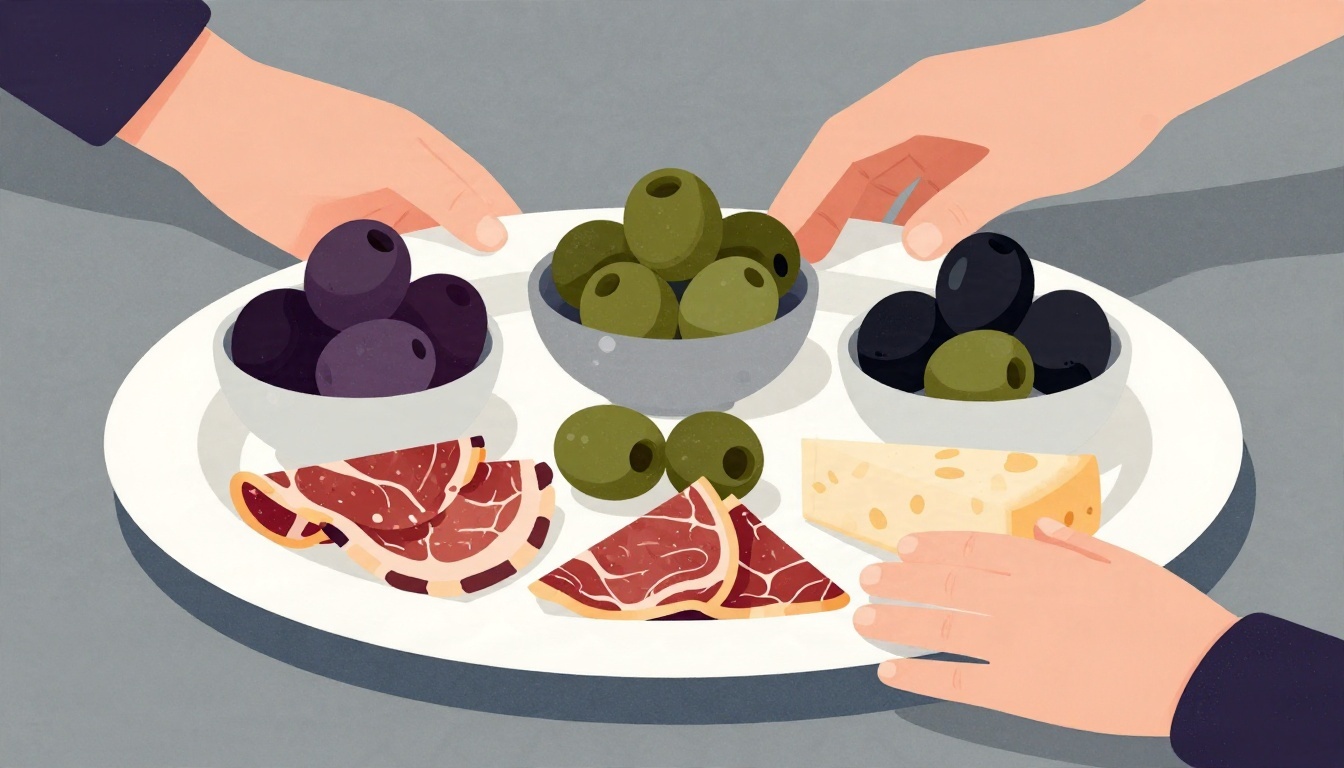
- Keep colors separate on the board. Small bowls or distinct clusters read as abundance; one mixed pile reads as leftovers.
How to serve and store them
Drain olives well before plating so brine does not pool on the board. If you marinate them, do it a few hours ahead with olive oil, garlic, and herbs, and keep them refrigerated until serving. Store opened olives in their brine or oil, refrigerated, and use them within a reasonable window rather than letting them sit at room temperature for days.
How the Featured Expert Can Help
Mama Maria's is a local catering and delivery shop that sells handcrafted Italian mixes and sauces online. Owner Maria Skidmore offers a small line of products, including meatball mix and pasta sauce, and earned a 2024 award for its red sauce. If you are building an antipasto spread for a small event and want guidance on pairing and catering, you can reach the shop at mamamariaswv.com.
Quick quiz
Test what you just read before you shop.
{"question":"Which olive does Olives101 recommend as the buttery green anchor of an antipasto platter?","options":["Castelvetrano","Gaeta","Oil-cured black"],"correctIndex":0}