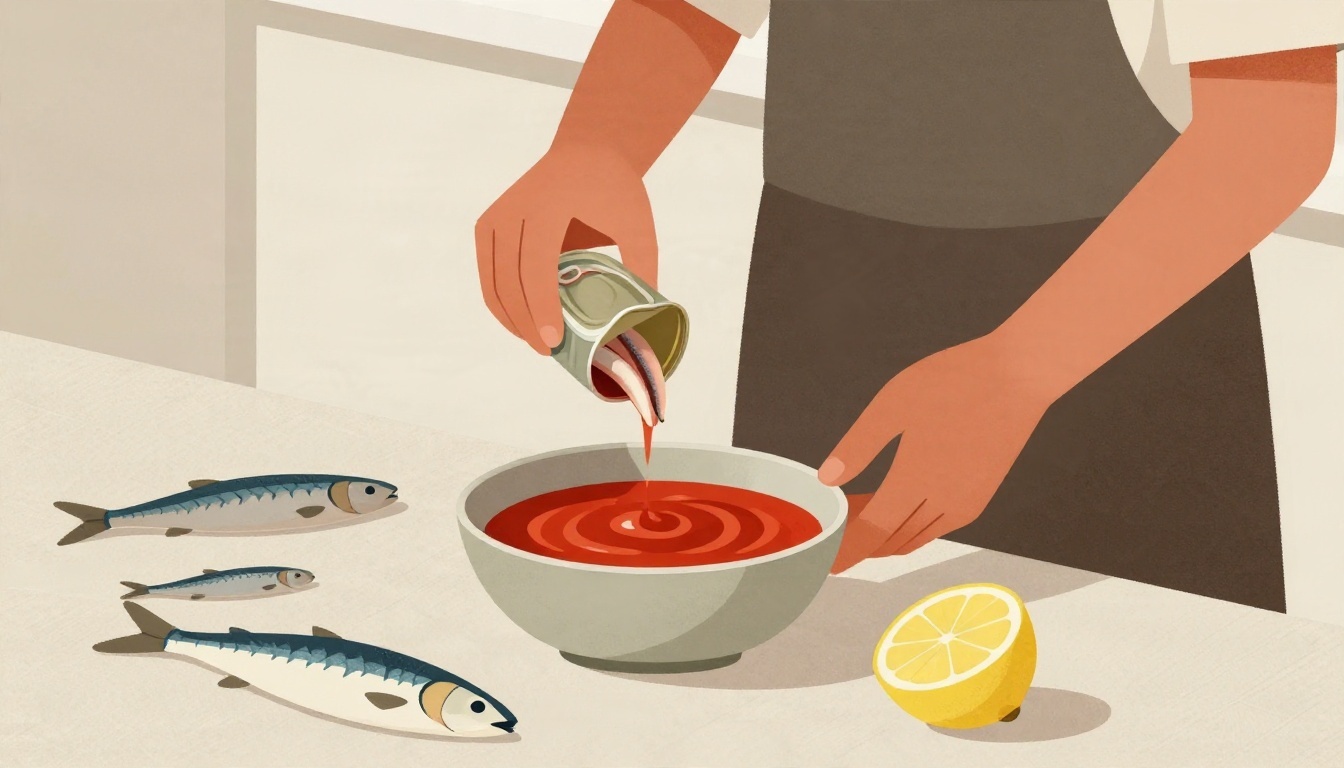
Anchovies are the quiet ingredient that makes a pasta sauce taste finished. But the wall of tins and jars in the store gives you almost no help: salt-packed, oil-packed, paste, marinated white fillets. They are not interchangeable in every recipe, and choosing badly can make a sauce too salty, too fishy, or just flat. This guide walks you through what each type is for, so you can buy once and cook with confidence.
According to a Serious Eats anchovy taste test, which type scored highest overall?
Select one answer.
Start with the three main types
Almost every anchovy you can buy falls into one of three categories. Knowing what each one does in a sauce is the whole decision.
- Salt-packed anchovies. Whole fish cured in salt, usually sold in a tin or tub. They have a long shelf life and are considered by many cooks to be the best-flavored option, but they need work: you rinse and soak them to remove the salt, then fillet them. The Paupered Chef notes that the best anchovies tend to be packed in salt, while the worst often come in brine or oil and can be rancid.
- Oil-packed anchovy fillets. Ready-to-use fillets in a tin or jar. These are the practical everyday choice for most home cooks. Serious Eats' taste test found canned anchovies scored highest overall (7.6/10), with oil-packed fillets close behind at 7/10.
- Anchovy paste. A tube of ground anchovy. Convenient for stirring into sauces, but it scored lowest in that same taste test at 6.7/10, so treat it as a shortcut rather than a first choice.
There is also a fourth product you should not confuse with the others: marinated white anchovies. The Los Angeles Times buying guide separates them out, noting that oil-packed are good to start with, salt-packed are better, and marinated white anchovies are a different thing entirely. White anchovies are served as an antipasto, not melted into a cooked sauce.
Match the anchovy to the job
Ask what the sauce needs before you pick a tin.
For a slow-simmered red sauce or Sunday gravy, oil-packed fillets are the easiest path. They dissolve into the sauce and season it without extra prep. If you want deeper flavor and don't mind the work, salt-packed is the upgrade.
For a quick olive-oil, garlic, and anchovy sauce, the anchovy is the star, so quality matters more. Lidia Bastianich's capellini with anchovies, capers, and fresh tomatoes calls for 2 to 3 ounces of chopped anchovy fillets and gives a range for the bold ingredients, so you can dial the anchovy up or down to taste. That recipe is a good reminder that anchovy quantity is a dial, not a fixed rule.
For a sauce where you don't want to bite into a fish, follow the approach in Sicilian Girl's anchovy spaghetti: chop most of the fillets fine so they melt into the oil, and keep a few back as an optional garnish for people who want them.
A buying checklist you can use in the store
- Decide salt-packed vs. oil-packed first. Salt-packed means more flavor and more prep. Oil-packed means convenience.
- Read the label for packing liquid. Oil-packed should list olive oil, not vague "oil." Avoid tins that look swollen or dented.
- Check the salt number if you watch sodium. The Ambrosian Pantry cites USDA data listing European anchovy canned in oil, drained, at 3,668 mg of sodium per 100 g. That is a lot, so taste before you add salt to the sauce.
- Skip the paste unless you are in a hurry. It works, but it is the weakest option for flavor.
- Don't buy marinated white anchovies for cooking. They are for serving, not simmering.
- Buy the size you will finish. A big tub of salt-packed anchovies is only a bargain if you will use it.
Prep and store them correctly
Salt-packed anchovies need to be soaked and rinsed before use, then filleted, and the backbone removed. Do this over the sink and pat them dry. Oil-packed fillets just need draining; some cooks discard the packing oil, as the Sicilian Girl recipe does, and cook the fillets in fresh olive oil.
Storage differs by type. According to Molo Modo 21, anchovies in salt have a longer shelf life than anchovies in oil, and the storage instructions are always stated on the product label. Read that label and follow it rather than guessing.
Common mistakes to avoid
- Adding salt before tasting. Anchovies are already very salty. Season the sauce at the end.
- Using too much in a delicate sauce. Start with the lower end of a recipe's range, as Lidia's recipe suggests, then adjust.
- Assuming all tins are equal. Quality varies widely, so buy from a source you trust and try one tin before committing to a case.
- Forgetting cheese rules. Sicilian Girl notes that cheese is generally never added to pasta dishes that include seafood, so skip the grating cheese on an anchovy-forward sauce.
How the Featured Expert Can Help
If you would rather start from a sauce that is already balanced, Mama Maria's is a local catering and delivery shop selling handcrafted Italian mixes and sauces online. Owner Maria Skidmore offers a small line of products, including meatball mix and pasta sauce, and earned a 2024 award for its red sauce. You can explore the products and catering options at Mama Maria's.