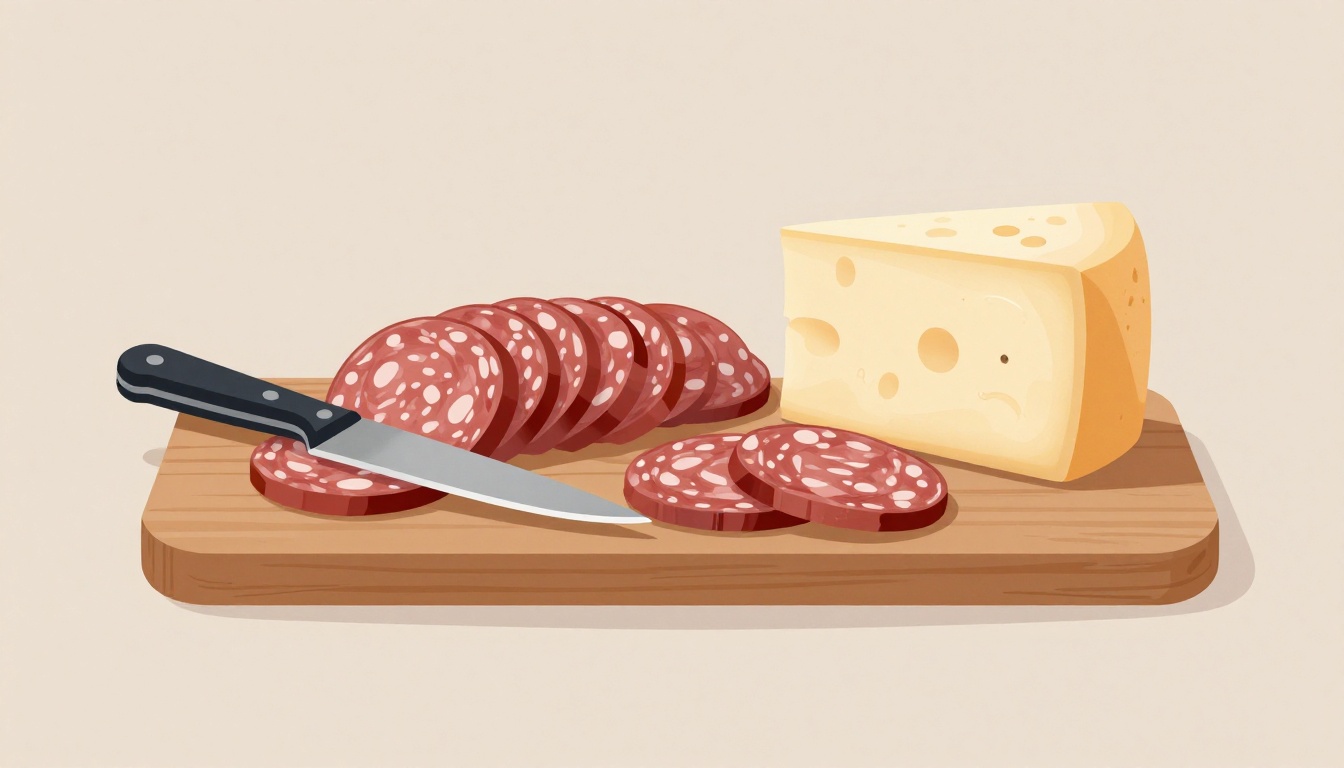
Building a memorable charcuterie board starts with choosing the right salami. But with so many options — Genoa, soppressata, felino, Calabrese — it's easy to feel overwhelmed. Authentic Italian salami is defined by its ingredients, how the meat is cut, and how it is prepared. This guide will help you navigate the selection with confidence.
Which of the following is a key characteristic of authentic Genoa salami?
Select one answer.
What makes salami authentic?
Salami is a cured sausage made from fermented and air-dried meat, typically pork. The word comes from the Italian "salume," meaning salted meat. Authentic Italian salami relies on a few key components: quality pork, sea salt, spices, and a slow aging process. The three main factors that set different types apart are the ingredients, the grind of the meat, and the preparation method.
Key varieties to know
Genoa salami
Originating in the northwestern Italian town of Genoa, this is one of the most common varieties. It is a medium-grind, garlic-heavy salami with a smooth, rich flavor and clean finish. It is always made of pork but sometimes contains beef or veal. Its distinctive flavor comes from seasonings such as garlic, salt, white and black peppercorns, and wine.
Soppressata
Soppressata is a simple salami that comes in both mild and spicy versions. It is typically made with coarsely ground pork and has a rustic, bold flavor. It originated in southern Italy and is now beloved worldwide.
Felino salami
Often called "the king of salami," Felino originates from the small town of Felino in Italy. It is known for its smooth consistency and dazzling flavor, rich with peppercorns and wine. This delicate salami is minimally spiced and slow-aged to bring out a sweet flavor. It often appears bright red when cut, with coarse ground lean pork and fat pieces speckled throughout.
Calabrese
Anytime you see the word "Calabrese" or "Calabrian," expect a bit of heat. Calabrian hot peppers are added to this traditionally pork-only salami, giving it a fiery bite that's delicious on pizzas, in sandwiches, or on charcuterie boards.
How to read the label
When shopping, look for salami that lists simple, recognizable ingredients: pork, sea salt, spices, and natural flavorings. Avoid products with excessive additives or artificial preservatives. Authentic Italian salami is fermented and air-dried, not cooked. Dry-cured salami is ready to eat once sliced, whereas fresh varieties must be cooked before consumption.
Building your charcuterie board
A well-rounded board includes a mix of textures and flavors. Pair a mild Genoa with a sharp Parmigiano-Reggiano, a spicy Calabrese with a creamy gorgonzola, and a delicate Felino with a nutty aged pecorino. Add cornichons, olives, and crusty bread to complete the experience.
Quick checklist for choosing authentic salami
- Check the ingredient list: pork, sea salt, spices, natural flavorings.
- Look for "dry-cured" or "air-dried" on the label.
- Prefer salami from small producers or imported from Italy.
- Avoid products with long lists of artificial additives.
- Ask your local Italian deli or specialty shop for recommendations.
Quiz: Test your knowledge
Which of the following is a key characteristic of authentic Genoa salami?
How the Featured Expert Can Help
For handcrafted Italian products and catering guidance, visit Mama Maria's. Maria Skidmore offers a small line of artisanal Italian mixes and sauces, including a 2024 award-winning red sauce, perfect for pairing with your charcuterie selections.