Which of the following is the most reliable indicator of freshness in extra virgin olive oil?
Select one answer.
Why your dipping oil might be letting you down
You buy a bottle labeled "extra virgin," pour it into a dish, dip your bread, and the result is flat, bitter, or just plain disappointing. The problem isn't you — it's that many supermarket "Italian" olive oils are blends, old, or not what they claim to be. For home cooks who want that bright, peppery kick you get at a good Italian restaurant, choosing the right bottle is the first step.
What makes olive oil "extra virgin"?
Extra virgin olive oil (EVOO) is the highest grade. It must pass both sensory tests (no defects) and chemical limits (low acidity, high polyphenols). True EVOO is cold-pressed, meaning no heat or chemicals are used during extraction. That process preserves the fruit's natural flavor and healthful compounds. According to the North American Olive Oil Association, freshness matters most — EVOO is best when recently produced.
How to read the label like an Italian
1. Look for a harvest date
Unlike wine, olive oil does not improve with age. A harvest date (not just a best-by date) tells you when the olives were picked. Oils from the most recent harvest will taste brighter and more vibrant. If you see only a best-by date, the oil could already be old.
2. Check for DOP or PDO certification
DOP (Denominazione di Origine Protetta) or PDO (Protected Designation of Origin) certifications guarantee the oil comes from a specific region in Italy and meets strict production standards. As noted by Vincenzo's Plate, the best Italian EVOO brands typically carry DOP certification or single-origin labeling.
3. Avoid clear plastic bottles
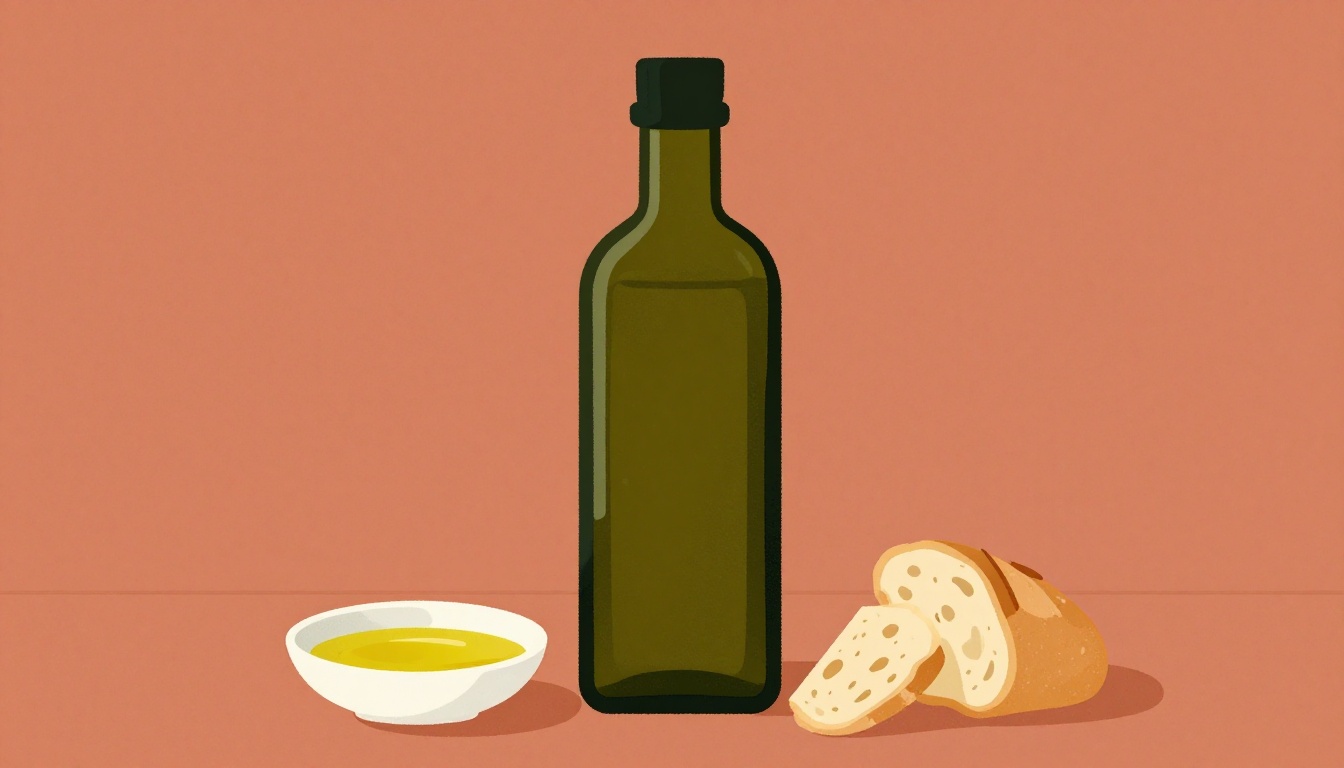
Light and heat are the enemies of olive oil. Dark glass bottles or metal tins protect the oil from UV light, which causes oxidation and rancidity. Clear plastic bottles are a red flag — the oil inside has likely degraded before you even open it.
4. Look for single-origin or estate-grown
Oils labeled "packed in Italy" may contain olives from multiple countries. Authentic Italian EVOO will list the specific region or estate where the olives were grown and pressed. Single-origin oils minimize the risk of blending with older or lower-grade oils.
What to taste for in a dipping oil
A high-quality EVOO for dipping should taste fresh, slightly bitter, and mildly peppery — these flavors come from polyphenols and antioxidants. The peppery sensation at the back of your throat is actually a sign of quality. If the oil tastes flat, greasy, or like old crayons, it's past its prime.
Quick checklist for buying dipping oil
- Harvest date within the last 12–18 months
- DOP or PDO certification
- Dark glass bottle or metal tin
- Single-origin or estate-grown
- Cold-pressed on the label
- Free acidity below 0.8% (often listed on the bottle)
How to serve it
Pour a small amount into a shallow dish. Add a pinch of flaky salt, a crack of black pepper, and maybe a few red pepper flakes. Dip warm, crusty bread. That's it. The oil should be the star.
Quiz: Test your knowledge
Which of the following is the most reliable indicator of freshness in extra virgin olive oil?
A. A low price B. A harvest date on the label C. A clear glass bottle
Correct answer: B. A harvest date tells you when the olives were picked, which directly relates to freshness. Clear glass bottles (C) actually accelerate spoilage, and price (A) is not a reliable indicator of quality.
How the Featured Expert Can Help
Maria Skidmore of Mama Maria's knows that the best Italian cooking starts with quality ingredients. Her handcrafted sauces and mixes are made in small batches using family recipes, and she can help you pair the right olive oil with your next meal or event. Whether you need a recommendation for dipping or a full catering menu, reach out to Mama Maria's for guidance rooted in real kitchen experience.